
A co-produced strategy for disseminating pain education based on our six Key Messages.
Our Communications Strategy

Introduction
The dissemination of pain education is crucial in ensuring that individuals living with persistent pain, their support networks, and healthcare professionals have access to evidence-based information. The goal is to create a comprehensive communication strategy that leverages the insights from the thematic analysis of lived experiences, focusing on Flippin’ Pain's six key messages.
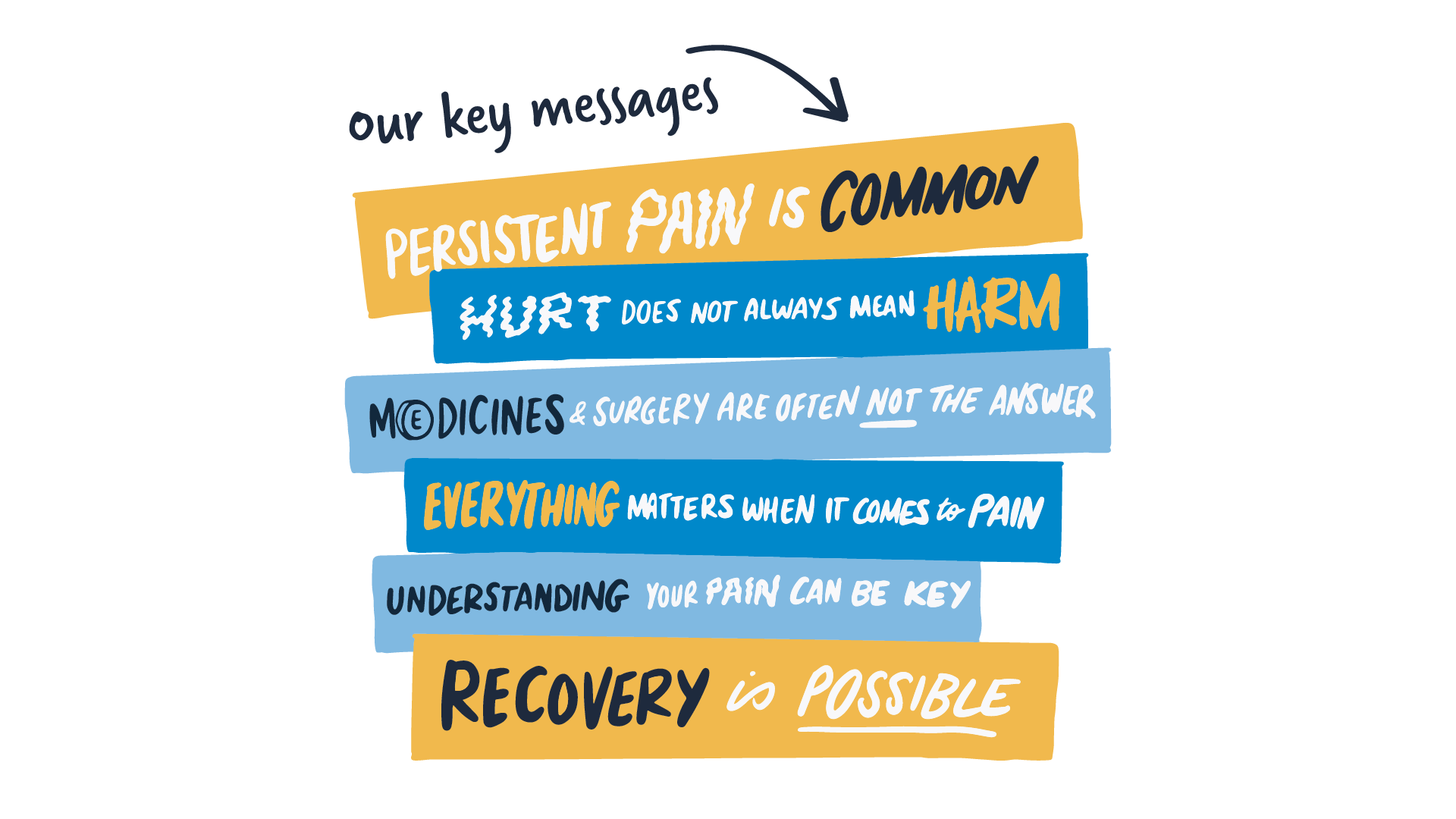
This strategy considers the themes identified from the co-creation event: The Role of Society, Navigating the Noise to Signal Ratio, Making Every Contact Count (MECC), and Influences During Transitional Life Experiences.
1. Leveraging the Role of Society
Objective: Disseminate pain education by targeting different levels of influence, from personal relationships to institutional messaging.
1a. Micro-Level: Personal Relationships
Target Audience: Individuals with persistent pain, family members, peers, community leaders.
Approach: Develop a community-driven, bottom-up communication approach that empowers individuals to share pain education within their close-knit circles.
Actions:
Peer Education Programs: Create peer-led workshops or support groups where individuals can learn about pain and share experiences.
Family-Centric Campaigns: Develop resources (e.g., brochures, videos) that encourage family discussions about pain, emphasising lived experiences and mutual support.
School Programs: Integrate pain education into school curricula, training children to understand and communicate pain to their peers and family members.
1b. Macro-Level: External Influences and Structural Messaging
Target Audience: Healthcare providers, workplaces, religious institutions, media.
Approach: Utilise top-down strategies to align organisational messages with evidence-based pain education.
Actions:
Healthcare Training: Implement continuous education programs for healthcare providers to ensure consistent messaging about pain management, emphasising the importance of holistic approaches over biomedical solutions.
Workplace Policies: Collaborate with HR departments and management to develop workplace policies that support employees with chronic pain, reducing stigma and promoting understanding.
Media Partnerships: Engage with media outlets and influencers to propagate accurate pain messages. Encourage them to portray chronic pain stories with nuance and depth in popular culture.
2. Navigating the Noise to Signal Ratio
Objective: Enhance the clarity and accessibility of pain education by reducing misinformation and amplifying credible sources.
2a. Clarity in Messaging
Target Audience: General public, healthcare professionals, online communities.
Approach: Simplify pain education messages and ensure they are consistent across all platforms.
Actions:
Centralised Information Hub: Create an online portal where individuals can access reliable, evidence-based pain education resources. This platform should include FAQs, myths vs. facts sections, and personal stories that align with the six key messages. This is already on the Flippin’ Pain Website, and should be promoted to the public, national bodies and local organisations to increase reach, engagement and significance.
Standardised Communication Materials: Develop standardized educational materials (e.g., posters, infographics) for use in healthcare settings, ensuring that all messages are clear, concise, and consistent.
2b. Combating Misinformation
Target Audience: Social media users, online forums, public health officials.
Approach: Actively combat misinformation by providing easily digestible, factual content and engaging directly with communities where misinformation is prevalent.
Actions:
Social Media Campaigns: Launch campaigns on platforms like Instagram, TikTok, and Twitter, where younger demographics are more likely to encounter misinformation. Use engaging visuals and clear language to present the six key messages.
Influencer Collaborations: Partner with trusted influencers who can convey accurate pain education to their followers, particularly targeting demographics that are most susceptible to online misinformation.
Media Literacy Programs: Develop programs aimed at educating the public on how to critically evaluate health information online, focusing on distinguishing between credible and unreliable sources.
3. Making Every Contact Count (MECC)
Objective: Integrate pain education into every relevant interaction across healthcare, community, and public settings.
3a. Healthcare Integration
Target Audience: Healthcare providers, patients, caregivers.
Approach: Embed pain education into routine healthcare interactions.
Actions:
Clinical Encounters: Train healthcare professionals to incorporate the six key pain messages into every patient interaction, ensuring that pain education is part of routine care.
Community Health Initiatives: Collaborate with local health departments to include pain education in public health campaigns, particularly in areas with high rates of chronic pain.
3b. Community and Public Engagement
Target Audience: General public, community organisations, volunteers.
Approach: Utilise everyday settings to disseminate pain education, making use of informal interactions to convey key messages.
Actions:
Public Campaigns: Place educational materials in public spaces like libraries, community centres, and transport hubs, using engaging formats such as posters, interactive kiosks, and digital screens.
Volunteer Training: Equip volunteers in community organisations (e.g. Age UK, local charities) with pain education knowledge, enabling them to engage in meaningful conversations about pain during their interactions with the public.
Cultural Sensitivity Initiatives: Develop pain education materials that are culturally tailored and translated into multiple languages, ensuring they resonate with diverse communities.
4. Influences During Transitional Life Experiences
Objective: Tailor pain education to key life transitions, leveraging these moments to reinforce or reshape beliefs about pain.
4a. Life Stage-Specific Messaging
Target Audience: Adolescents, new parents, workers, retirees.
Approach: Customise pain education messages to align with the specific concerns and challenges of each life stage.
Actions:
Adolescent Education Programs: Introduce pain education in schools, focusing on the transition into adulthood. Teach young people about the accurate science of pain and the importance of seeking evidence-based treatments.
Workplace Transition Support: Offer pain education resources to individuals transitioning into the workforce or experiencing job changes, focusing on how to manage pain in a new work environment.
Retirement Workshops: Develop workshops for retirees that focus on pain management strategies and the importance of staying active and engaged in later life.
Conclusion
This communication strategy for disseminating pain education aims to address the complexities of how pain messages are received and interpreted. By leveraging the role of society, navigating the noise-to-signal ratio, making every contact count, and focusing on transitional life experiences, we can ensure that Flippin’ Pain’s six key messages reach a broad and diverse audience. This approach not only increases the availability and accessibility of evidence-based pain education but also empowers individuals and communities to better understand and manage pain.