
Sharon’s Story
Sharon, tells us how a Bob Marley song changed her perspective.
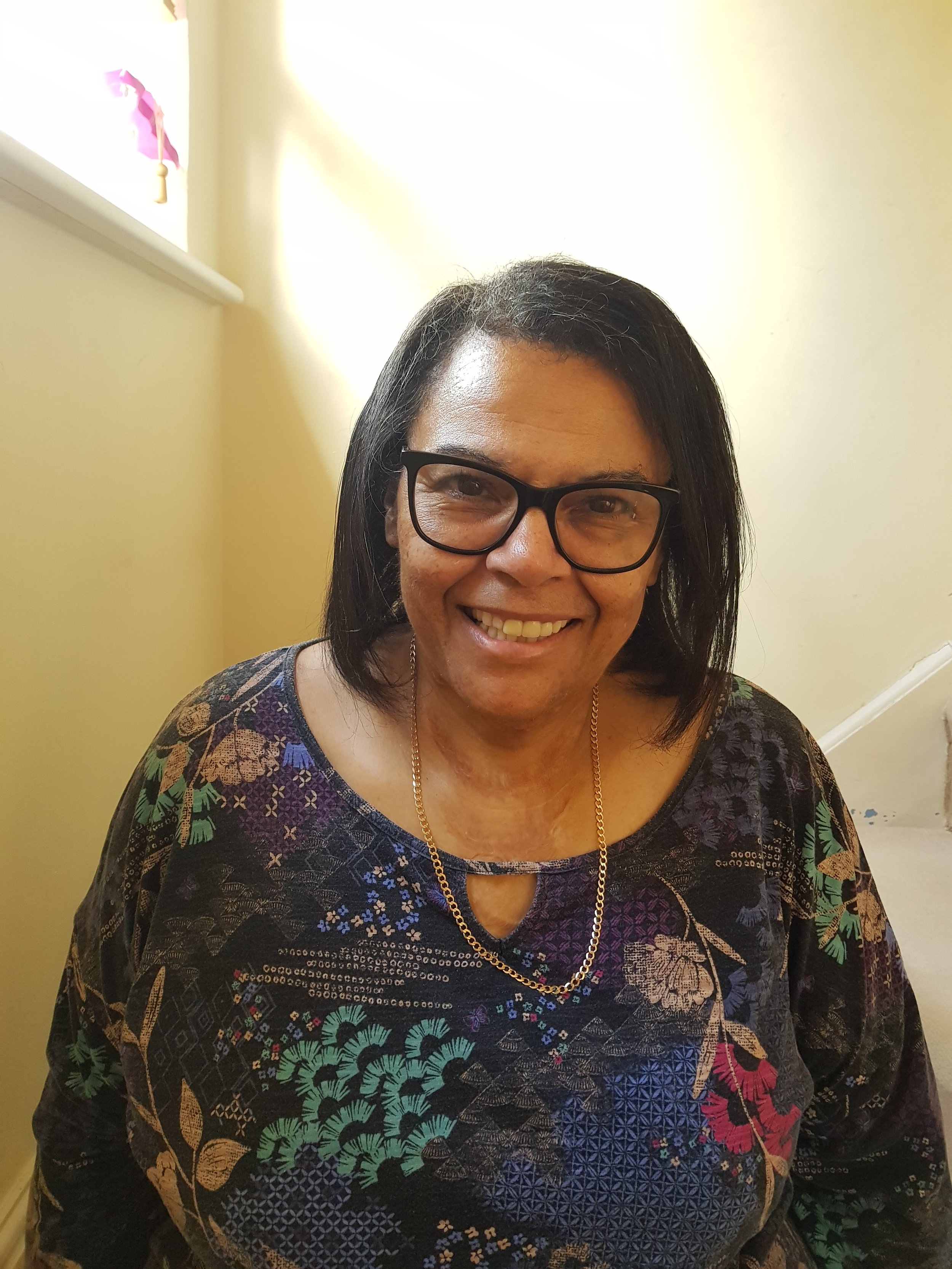
“The majority of my pain is in my hip due to a bad fall I had about eight or nine years ago when I was running.
“I didn’t realise how badly I’d injured my hip until a few years later, when I saw an Orthopaedic surgeon and he told me I’d actually fractured it in the fall. I’d put on a lot of weight in the years since the injury which meant I wasn’t a good candidate for surgery and I’ve lived with pain ever since.
“In the early days of living with pain, I tried a lot of things to get relief. I was referred to a pain management doctor who in the end got exasperated with me because every tablet he suggested I either reacted badly to or was absolutely no use at all.
“Why do they call these things painkillers? They don’t do what they say on the box.
“I remember telling him that they didn’t kill my pain. To me, they had begun to feel like a waste of time. I wanted to try other things.
“My pain is genuine of course, but I realised I could use it to manipulate other people and situations I found myself in. My friends would say to me, “are you going to the wedding this weekend?” and I’d say no, because I was going to be in pain. But how did I know that, really? And what steps could I take to reduce that pain? I’d allowed the pain to take over my life.
“I remember one day feeling particularly despondent. I was sat in bed feeling sorry for myself thinking that I was going to end up in a wheelchair or walking with a stick. After all, that’s what the surgeon had said to me, and who was I to challenge that? He was the doctor. Then the nurse in me kicked in, and I decided not to accept it.
“Redemption Song by Bob Marley came on and there was a line in it that was my turning point. Up until that point, I’d let pain enslave me. I’d become a slave to the pain. This one line said: “Emancipate yourself from mental slavery. None but ourselves can free our minds.”
“I sat there listening and thought about how I could apply that to my pain and how I had to emancipate myself from the stage I was at. And my journey started there.
“Soon after that, I was invited to join a pain management programme through my local NHS pain team. I thought, well, what have I got to lose?
“The programme really was the start of a new beginning for me. It was so beneficial to me and Sophie (the pain psychologist) was so good. I was encouraged to reflect on a lot of different things in my life. I realised my life had become sedentary and I was closeting myself away, becoming a recluse and dependent on my partner.
“Since then I’ve lost about six stone in an effort to get fit. I’ve done this through the gym and swimming three times a week.
“I’ve also been exercising at home for half an hour every day in lockdown. It’s difficult to maintain motivation, but I make sure I do it every day and don’t skip any. I don’t take any painkillers; by doing what I do, I control my pain better than painkillers!
“Now if I get an invite to a wedding, I ask: when and where? I’m aware that there’s a chance I might get severe discomfort, and so I drive myself so that if it does become unbearable, I can get myself home. I also take a camping chair in the boot so if there aren’t seats I have a one of my own. But I also know that sitting for a long time can increase my pain, so I do some standing every hour.
“I also try and re-divert my thought processes by thinking about what’s going on and socialising with other people, so it puts the thought of discomfort out of my head. Pain is with me all of the time, but I control it so that it’s mild or I’m not always thinking about it.
“I’m not sure that the pain management programme would have worked for me if I hadn’t got to that place of accepting my pain already. I heard those Bob Marley words and thought they were so poignant and meaningful. They made me think, “what the hell are you doing? This isn’t you!” That was the beginning.
“Nowadays, I never tell people I have pain because I find people give me a certain look: a look that they’re not even aware of. They offer you paracetamol, or suggest you go to sit down and rest. Everything then is about the pain.
“Instead, I try to say that I’ve got ‘discomfort’, and it’s either severe, moderate or mild. When I say ‘discomfort’, I find people don’t associate it with pain and I’m not a patient in their eyes. My partner tries to do a lot for me instead of leaving me to be independent. If I drop something, he’ll immediately pick it up so I say to him ‘‘let me try and do it myself. If I need help, I’ll ask, but I still find that really hard.
“I still hit my limit and get frustrated at times.
“Sometimes I have to pause and remind myself that I’m not the runner I used to be. I have to stop myself from looking back at what I can’t do and start to learn about what I can do. It’s a case of adjusting and coming to terms with the fact that I can only do what my body will allow me to do. If I push beyond that, I pay for it… but I accept that it’s good payment!
“One day I went swimming and did another few lengths because I felt good. I got out of the pool felt ok until I got home and my bones felt achy. I’d paid for it, but it was a good pay! I’d enjoyed the extra lengths and it just meant that I needed a bit of extra time to recover.
“I learned a lot about acceptance from being a nurse. I would look at my patients and the journey they were on towards the end of life. You can either say, “well I’m going to have this pain anyway so I might as well just own it”, or you can say, “I’ve got this pain and I’m not doing it”. It’s about acknowledging the pain sitting on my shoulder – that will always be there – but it’s not going to rule me. I have my boundaries and I try to push them sometimes. It’s an ongoing journey.
“I no longer say ‘I can’t’ but I still recognise my limits.
“I thought that getting house adaptions would make me dependent, but actually things like my grab rails have helped me maintain my independence. My pain isn’t going away, so I’ve adjusted my lifestyle to reduce it from severe to mild. I control the discomfort rather than the other way round. It doesn’t always work and you have to experiment.
“I do still sometimes get frustrated by my pain: for example, I decided not to go to New York with my sisters because of the amount of walking involved. I accepted this was something I couldn’t do, but I did go to see my brother in Miami instead!”