
Brian’s Story
Brian tells us he felt abandoned when a consultant discharged him and said there was nothing more they could do for him.
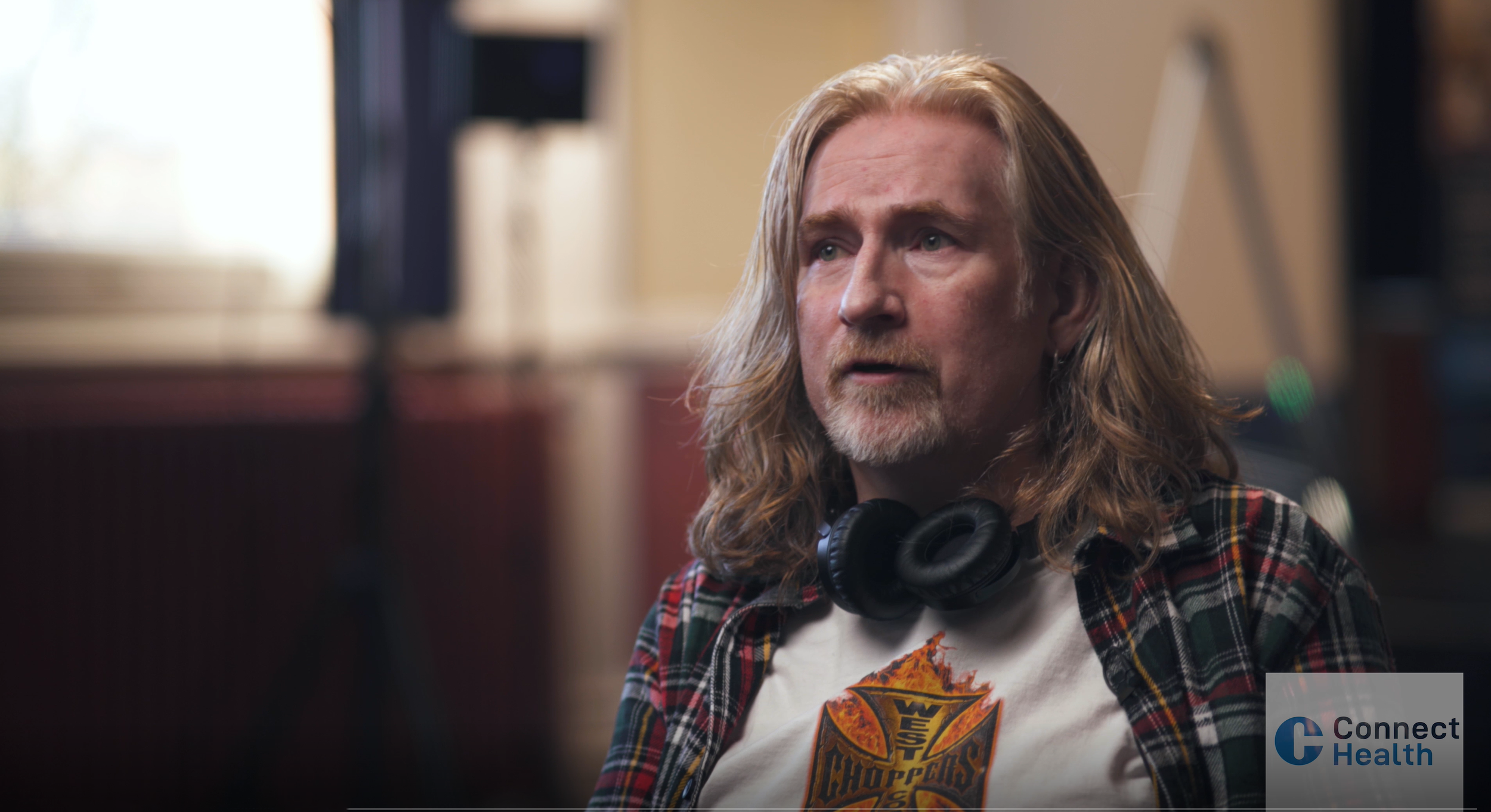
“I live with psoriasis and psoriatic arthritis, and I also had my right arm all but severed in an accident just before my 21st birthday. And then, one morning I woke up with back pain and I couldn’t figure out why.
“That was about 22 years ago. I did the whole GP, physiotherapist, osteopath, over-the-counter, keep-going type stuff, and then a few years later I started getting pain-relieving injections into my back.
“The first couple were really effective, but what I didn’t fully appreciate was that the relief wouldn’t last.
“I then went through a period of being in an awful lot of pain and still doing a lot of travelling with work as well as looking after a young family. I was constantly trying to get better. I had three or four injections in quick succession with practically no relief. I thought, if I just had another injection, more frequent injections or another scan, it would tell me what was wrong.
I was going to physiotherapy, walking, doing Pilates, even windsurfing and mountain biking in the early days. I wasn’t being passive about my health, but I was always trying to find a ‘fix’ for the problem causing my pain. I didn’t realise pain could be a problem in and of itself.
“When it seemed like further injections wouldn’t work, I went for surgery (a spinal fusion) and despite initial good progress, I was still in pain. So I had a different surgery (a spinal decompression). The irony was that I went back to work on stronger pain killers than before the fusion.
“My practical world shrunk from someone with a young family and a very interesting, fulfilling sales job with long hours and international travel, to spending days on end alone in my flat not talking to anybody.
“That’s something I struggled with and still struggle with to this day. So I started hunting around, looking for different options and came across some online pain management courses. All of this time my psoriasis was flaring out of control and exacerbating my pain. It wasn’t until that time that I started thinking that pain was something I was going to have to live with for the rest of my life. That I‘d need to learn to make sense of it and manage it, as opposed to getting fixed and going back to my old life.
“I’d lived with back and leg pain for nearly twenty years and psoriasis for the best part of fifty years. The thing that sparked the change was partly emotional: a feeling that I couldn’t keep going like this. It’s the definition of madness, as they say: you can’t keep doing the same thing and expect different outcomes.
“There was a self empowerment side to it too. Even though I wasn’t expecting to be ‘fixed’, I had expected treatments to enable me to go back to functioning like I was before. I think what really helped me was when I changed my approach from trying to ‘fix’ myself and go back to the way I was, to focusing on managing my pain in order to make the best of my life.
“I had reached the point where I couldn’t keep going down the same path. No-one had had that conversation with me though: I’d had to figure it out for myself.
“I began working through self-management resources online and learning about pain.
“I’ve worked in research with leading pharmaceutical companies, and yet I felt all of that pain science stuff had somehow passed me by. I still live day-to-day with pain, but there’s a balance now because of what I’ve learned.
“Some days are better than others. I try to get out and about as much as I can. I try to find interesting and rewarding things to do. Looking back, my way of thinking about pain was that it was the consequence of something else rather, than pain itself being the problem that needed treating. I thought if I sorted my discs out that pain would go away.
“I was aware about the dangers and side effects of certain medications, such as the risk of addiction with opioids, and the possibility of them actually causing more pain.
“Initially the injections I was having were meant to be an alternative to taking pain meds, because I’d got so used to the painkillers I’d developed a tolerance. But despite an initial improvement with my first injections, the later ones provided little or no relief.
“I’m inclined to think that patients living with pain should have access to as many resources that work for them as is practical, but under the guidance of health professionals. I’m not anti-painkillers, but I am about informed choice. I think you’ve got to consider the adverse side effects when making a decision on treatments.
“My advice to others with pain would be to have an empathetic support network around you, including friends and family.
“Take steps to learn about your pain and take advantage of the resources that are out there. The solution is often a blend of different things. Go and talk to someone who isn’t a surgeon: not necessarily a pain management specialist, but someone who can be an unbiased champion of your choices.
“Stay empowered but understand that there’s no silver bullet, no one thing that will fix pain. And be kind to yourself. It’s far too easy to beat ourselves up, when really, developing compassion for oneself is far more beneficial. We didn’t choose this life with pain, but it doesn’t mean you can’t have an enjoyable and fulfilling life.”