
Kathleen’s Story
Kathleen shares how seeing her sister in the sea started a journey of courage and acceptance.
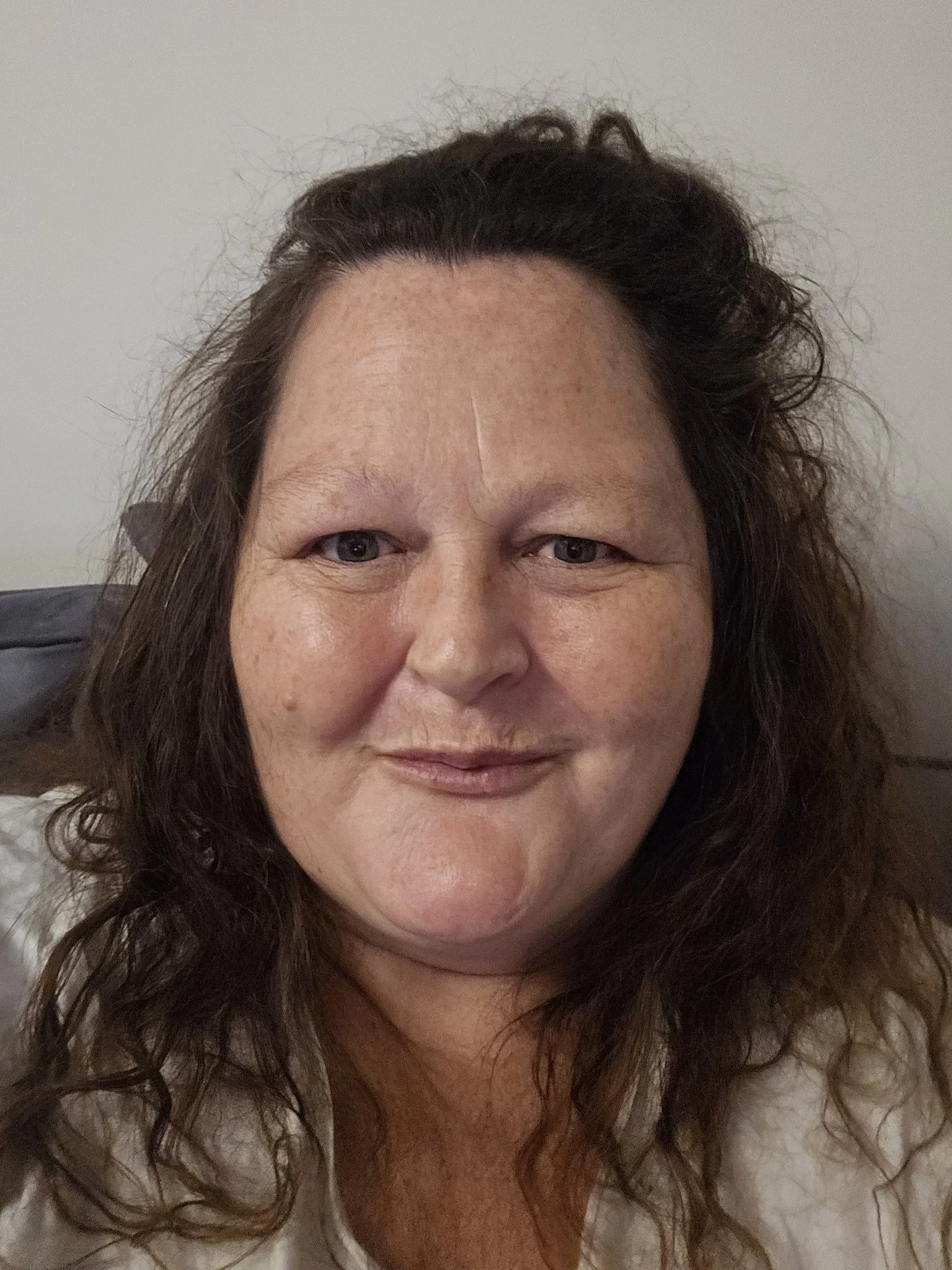
I was classed as a clumsy child because I was always falling and hurting myself. It turned out I had severe Hypermobility.
“I remember having pains in my hands from a very young age. I then had my first migraine at the age of ten, where I couldn’t see a thing, it was horrendous. That’s the first really significant pain I’d felt, but then gradually, throughout my teens, the pain progressed. The more falls I had, the worse my pain got. I’ve always been extremely sensitive to touch. It’s quite painful if somebody touches me unexpectedly; it’s like they’re stabbing a fork in me.
Then during pregnancy 31 years ago, I put a lot of weight on and that made things worse.
“I have to say, I loved labour pain! They said I was in full blown labour and I only had a little bit of back pain. I thought, this is all right! I think it was because that pain had a positive outcome: I was feeling pain for a good reason, and that made it a totally different experience. At this point I was living with pain in my hands, knees, hips and neck, and was having ongoing falls. I did go to the gym, took aerobics classes and was walking everyday (as well as looking after my three children). My son has autism and other health problems so I had a lot going on, and I ended up feeling really low. I developed chronic asthma and that stopped me walking and I think the depression just made the pain feel one hundred times worse.
Fast forward a few years to 2017, when I decided to go back to university to do my Honours Degree in Public Health.
“Halfway through my Masters, my back went and that was it. I became dormant and I could barely do anything because of the pain. This was a new pain and I was really struggling with it, I couldn’t put on my shoes or even get to the toilet in time. Over the next few years, I tried to stay motivated whilst living with osteoarthritis, hypermobility and lipoedema in my legs. My goal was to lose some more weight and get my mobility back but it just never happened. And then the first lockdown hit.
“I put quite a lot of weight on very quickly, going from 30 stone to 40 stone. I couldn’t stand up for three seconds without being in agonising pain, and when I walked, my posture was completely bent over. Because of lockdown, I couldn’t see my family. My daughter was working as a nurse and I was vulnerable because of my asthma. I became very isolated and very unhappy, to the extent that I just couldn’t take it anymore; I just wanted to go to sleep and never wake up, because the pain had taken over my entire wellbeing. I have children and grandchildren that I want to live for, but the pain (both emotional and physical) became everything.
“My GP said to me that I just couldn’t go on like this. I was initially very reluctant to take strong painkillers because of the side effects, but I ended up starting on fentanyl patches and pregabalin after tramadol.
I’d always seen pain as an enemy. It was attacking me, stopping me from being alive and joining in with activities with my friends and siblings.
“I saw it as something unkind and I was fighting it. But I realised that fighting was making me more depressed and more angry. I woke up one day and realised: maybe it wasn’t so much of an enemy, but just a voice telling me to take things slower, to pace myself and not focus on what other people are thinking about me.
“People called me fat and lazy and said I’d chosen to be overweight by overeating when actually I was doing the opposite: I was punishing myself for the pain by not eating. It was a strategy I’d been using since childhood, because it’s one of the only things within my control.
My background in nursing training and public health gave me a strong understanding of pain science and it helped me weigh up the benefits of medication.
“But it also meant I was hard on myself. I knew it was possible to work through pain because I’d seen it in other people: I felt frustrated because I couldn’t seem to do that myself.
“I use one minute meditations quite often when things are tough as it helps me break a thought process. I always feel a little bit better when I’ve finished, and it’s a bit easier to cope.
“I heard a performer called Paul Holley singing country music on Facebook, and something connected with me and changed me. Music and singing help so much with my pain because I’m not in pain when I’m singing.
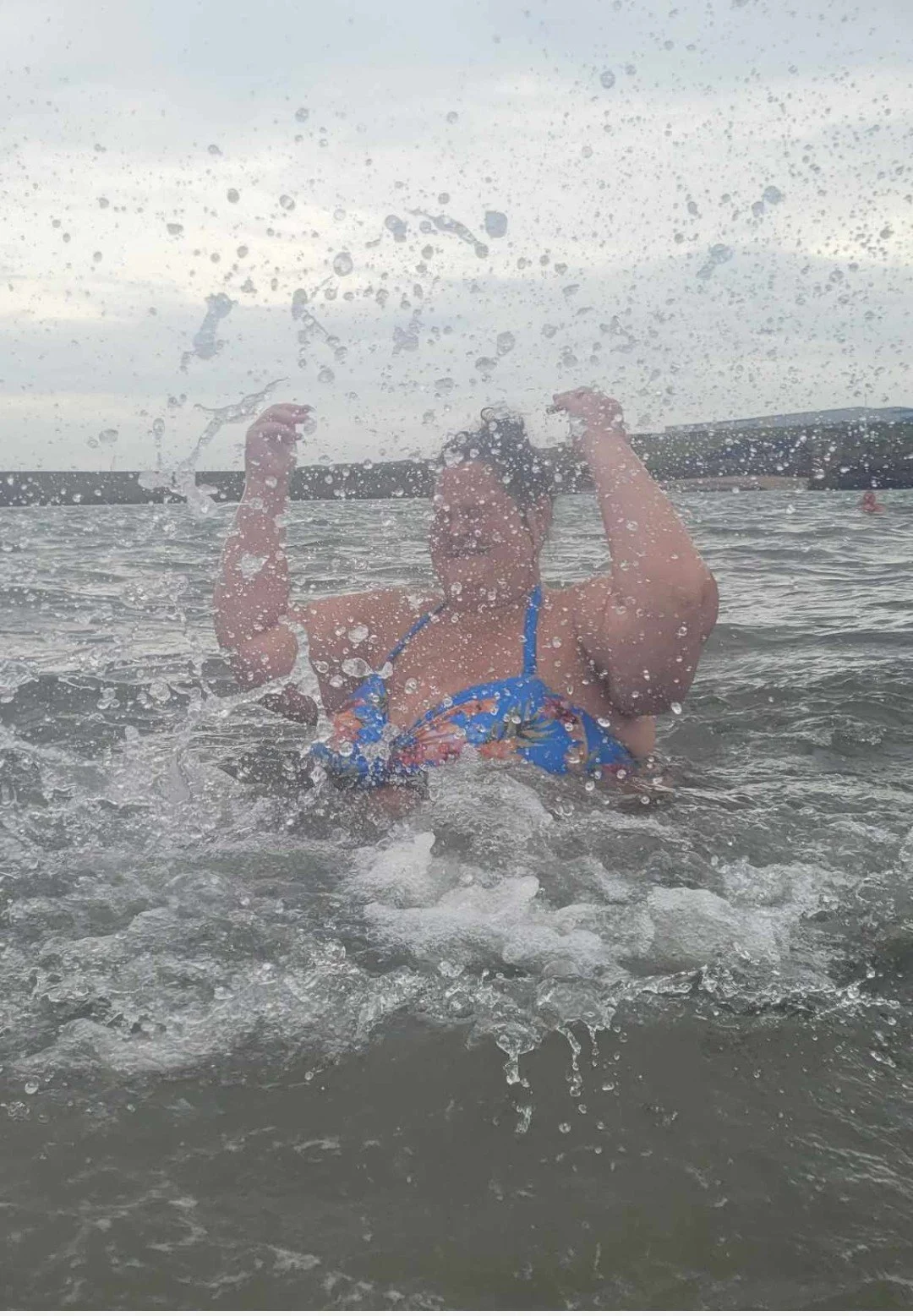
One day, I saw a picture of my sister swimming in the sea, so I phoned her up and told her I wanted to try it.
“I was in horrific pain to even get to the front door, into the car, and then at the coast I had to get down some steps. I kept falling over and people were looking but I could feel their empathy this time, nothing negative. I don’t know how many times I fell on that beach but I eventually got into the water and it was like the big black fog that had been over me drifted away and I could move. The cold relieved my pain and it gave me my body and my mind back. It was an abundance of joy.
“I’ve been outdoor swimming for two years now and I get that same effect every time, as well as a massive sense of achievement. It makes my pain feel like a motivator instead of my enemy and it feels like I’m doing something to ease it. I also love coming home from swimming and drawing because after being in the sea it’s so much easier to hold a pencil. I write poems about pain and mental health, too. I’m dyslexic so I never thought I was a writer, but this has all come from pain and swimming.
“Now I’m trying to come off pregabalin: the reduction hasn’t gone very well because of a pharmacy error, however I’m determined to wean off them and then my plan is to come off the patches as well with the support of my GP. I need to know there is a care plan in place because I don’t want to end up as I was when my pain was at its worst.
“My advice if you’re living with pain is to be kind to yourself first. Use affirmations to tell you that you can do this, and befriend your pain. Don’t fight it because when you do, it’s a lot more intense and it becomes easier when you learn to live with it.”