
Mahin, an Advanced Pain Physiotherapist and Flippin' Pain Community Pain Champion, lets you know of four ways to feel healthier and happier this winter
Prefer to watch a video than read this blog post? You can watch parts 1 and 2 of How to Improve Your Mood in Winter here:
I always feel much lower in mood in winter, and everything just feels more effortful to do, whether this is getting out of bed, motivating myself to exercise, or concentrating whilst working. And I know I’m not the only one.
As the winter days remain short and cold, it’s easy to feel imprisoned by the gloominess that surrounds us, with the darkness swallowing all of our energy, motivation and joy.
But does it need to be this way? Surely, there’s something that can be done to keep our fire burning through these colder darker months.
Fortunately for us, there is. I will share four ways you can improve your mood, energy and pain in winter, so these months don’t feel as much of a drag and you begin to feel healthier and happier.
SAD
You may have heard of ‘seasonal affective disorder’, otherwise known as SAD, which is a type of depression that comes and goes as the seasons change, and is usually worse in the winter. You may feel this is something you experience every time the clock goes back and the light begins to fade, and you wouldn’t be alone. Around 30% of us feel we suffer from SAD in the winter.
However, even without a diagnosis of SAD, it’s common to have lower mood in the winter. This does not necessarily mean you suffer from SAD, but if you are concerned about SAD, please seek personalised advice from a healthcare professional.
Why do we feel lower in mood?
Low mood in winter is linked to reduced exposure to sunlight during the shorter days, which may prevent the hypothalamus in the brain from working properly, which can lead to:
- an increase in the production of melatonin, our sleep hormone, which makes us feel sleepier.
- a decrease in levels of serotonin, which is associated with lower mood. Serotonin levels also have an impact on appetite and sleep.
- a disruption of our body’s circadian rhythm, our 24-hour clock.
Sunlight is used by the body to time certain functions, such as waking up and the release of certain hormones. Therefore, less sunlight in winter can lead to an upset of this body clock.
Don’t forget that anything our brain perceives as a threat or danger can lead to an increase in pain. All of the above can influence our nervous system in a way that can increase pain. So it’s not only the cold, damp weather that affects your pain- there are in fact many modifiable factors.
The four ways to improve your mood that I will let you know about now all influence these factors in a positive way, helping you feel better.
Outdoor Exercise
Exercise is the most evidence-based intervention for low mood we have. Exercising outdoors, or in nature (otherwise known as ‘green exercise’), has especially positive effects on mental health, self-esteem and mood.
This doesn’t even have to be for long or at a high-intensity, with research showing that these benefits begin after only 5 minutes of exercise at any intensity (light, moderate or high), with 20 minutes being the magic number to aim for.
So, an effective and easy way to improve mood during the shorter winter days is by getting outside in nature during daylight, even if this is only for a short period.
This can involve any type of exercise, such as walking, running, cycling, fishing, sailing, horse riding or gardening- the options are endless!
For those who can’t get outdoors, YouTube has countless free dance workouts, yoga sessions and chair pilates, and dancing in your kitchen obviously counts as well!
Remember, choose something that is enjoyable for YOU. As always, these benefits are much more when doing the activity with someone.
Outdoor exercise can also improve our sleep, especially in winter…
Sleep
I mentioned our circadian rhythm earlier and how a disruption to this, due to less sunlight hours, can lead to lower mood.
However, there are also many other lifestyle factors that can disrupt this rhythm. We can’t control how many sunlight hours there are in the day, but we can influence our daily habits.
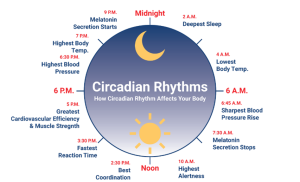
A recent study showed that poor sleep quality is linked to higher levels of anxiety, depression and musculoskeletal pain. So, if sleep is important, aligning your body clock to the circadian rhythm is vital to improve your mental health and pain. There are many ways we can do this. For 10 ways to improve your sleep, you can watch to my YouTube video here.
For now, I’ll focus on some key ways to improve sleep in winter. Firstly, back to outdoor exercise.
A 2019 study found that exercising early in the day improves alertness in the morning and helps people feel more tired earlier in the evening. This is because getting outside early in the morning and exposing ourselves to natural light helps shift our circadian rhythm by suppressing the secretion of melatonin (our sleep hormone) and increasing the release of other hormones, such as cortisol, that are responsible for increased concentration and alertness.
Another study found that those who exposed themselves to morning light between 8am and mid-day took an average of 18 minutes to fall asleep at night, compared to 45 minutes in those who were not exposed to as much morning light. They also slept for longer and deeper.
This access to morning light can even be for a short period, so consider having your first cup of tea, coffee or breakfast outside. I can’t say that I have my whole cup of coffee outdoors as it’s very cold right now, but I step outside for a minimum of 5-10 minutes as soon as it’s light.
Whatever the weather though, daylight is 10-20 times brighter than indoor lighting. This tells your brain it’s daytime, helps to regulate cortisol (your wake-up hormone) and sets up better sleep later. Although not as effective, if you absolutely can’t get outside, sit near a window while you have breakfast or a cup of tea. The effect is dose-dependent: more light exposure equals better mood regulation.
I also use a light therapy alarm clock (otherwise know as a ‘SAD lamp’) which begins emitting light 30 minutes before my alarm goes off and increases in brightness until the alarm.
It’s also valuable to note here, the importance of not focussing too much on how you feel when you first wake up. Most people will wake feeling fatigued and drowsy, especially when it’s still dark outside, thinking they need more sleep when actually, once out of bed and ready, continue to feel better as the day goes on.
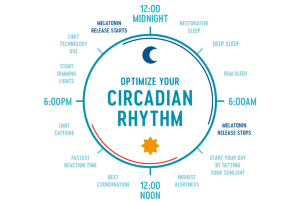
It’s easy when first waking to doze back off to sleep, but this actually makes us feel more tired later in the day as it upsets the circadian rhythm. As you can see from this image, melatonin secretion should typically stop at around 7.30am but snoozing means this does not happen!
Another consideration is limiting artificial light when it is dark outside in the evening.
Artificial light disrupts our circadian rhythm by ‘tricking’ our body into thinking it’s still light outside and altering the secretion of hormones, including melatonin. This is especially the case with light from backlit devices, such as mobile phones, laptops and tablets, which emit blue light that is received by the body in the same way as natural daylight.
So, to improve sleep during winter consider:
- getting outdoors within the first hour of waking to soak up some natural light, even if only for a few minutes.
- exercising in the morning (even better if this is outdoors!).
- trying not to snooze once your alarm has gone off (despite how you may feel) and get out of bed within 10 minutes of waking.
- limiting the use of backlit devices once it turns dark outside.
Comfort Eating
If you’re anything like me, the colder it gets outside and the closer it gets to Christmas, the more ‘comfort food’ we tend to eat.
This can be for many reasons:
- the festive period sees us indulging in more treats and this indulgence doesn’t always stop after Christmas.
- this time of the year is also associated with connecting with family and friends where food is plentiful, and the warm drinks, cakes and mince pies tempt us away from the cold outside and towards the abundance of films on the TV.
I love this period for all of the reasons I’ve mentioned and it’s a time to be enjoyed with these pleasures. But what effect is this having on your pain, fatigue levels and mood when these habits extend beyond December and into the new year?
According to one study, comfort food can reduce feelings of loneliness and increase feelings of social connection as it’s “a cognitive and emotional reminder of others”.
‘Comfort eating’ is very common in the winter months, but ‘comfort food’ doesn’t have to be unhealthy binge-worthy food. It can be warm home cooked wholesome meals that bring us closer to family, either by cooking together or as a reminder.
Consuming stodgy, sugary and carb-filled foods during winter will only drive up inflammation and pain levels, make us feel more lethargic, and will mean that we are less likely to be active, sleep well or feel good about ourselves.
Increasing our intake of foods containing omega-3, such as oily fish, walnuts and green leafy vegetables, are helpful at reducing inflammation and improving mood.
In the winter, we are exposed to less sunlight- our primary source of vitamin D, which is important for healthy bones. We also get vitamin D from oily fish, such as salmon, sardines and mackerel, as well as dairy products. However, as most of our vitamin D comes from sunlight, it’s often advised to take a daily supplement during the winter months, even if you have a healthy balanced diet.
You can find more information on vitamin D, population groups at risk of low vitamin D, and how much to supplement alongside your diet here. It’s important to do your own research on whether you would benefit from a vitamin D supplement, as this blog does not provide personal advice.
Social Connection
The summer months often see us ‘out and about’ more due to the better weather and, despite our best efforts, winter does not seem to instil that same sense of adventure.
The Covid pandemic and lockdown showed us how we can improve our connection with those immediately around us and our communities, as the restrictions simplified life and gave us time we may not have otherwise had to strengthen relationships.
Many of my patients who were fortunate enough to live with others reported that they enjoyed this time reconnecting or deepening their bond with those around them, but not everyone had this luxury.
Even for those who may have been more isolated, technology has advanced our forms of communication and led to, in some cases, people speaking more than they would in normal circumstances (spare a thought for those weekly zoom quizzes!).
This is a great demonstration of how we can remain connected to others without having to leave our homes. Even if we don’t want to go out as much during the winter due to the cold and darkness, that doesn’t mean we can’t have a tea/coffee or eat a meal together over a video call for example.
Why does it work? When we feel separate and alone, we don’t feel safe. Our nervous system starts to scan for threats, and we begin to catastrophise about events that may never happen, all of which dial up the volume of pain. Connection helps sooth this threat state by signalling safety to our brain.
Although the weather is colder now, we shouldn’t ignore these ways of connecting with others.
If you’re feeling low or lonely this winter, start small. Pick up the phone and call a friend, or text someone. Joining a club or a group with similar interests is another great way to get out of the house and connect.
Don’t let the little voice inside your head tell you that people don’t want to be disturbed, because often they also need to connect.
At the end of the day, we are social beings and have been evolving in communities since our ancestor days. So don’t isolate yourself this winter.
Most importantly, enjoy this time. The winter months give us an opportunity to get cosy at home, or dress warmly and get outside into the refreshing air. We can’t spend months waiting for winter to end, so let’s make the most of it!
When to seek help
If you experience unusually persistent low mood for more than two weeks, loss of interest in things you normally enjoy, significant sleep or appetite changes, or thoughts of self-harm, please speak to your GP. The January blues are real but clinical depression is different and needs professional support.

We're incredibly proud to have worked with and receive support from some fantastic organisations.

























Flippin' Pain are proud to be endorsed by