Dom from Sunderland tells us about how Flippin’ Pain helped along his pain management journey: from fear to freedom.
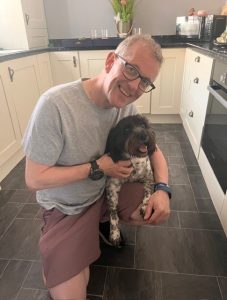 “I’ve always been an active person. Yoga, Pilates, swimming, running: movement was part of who I was. So when pain started creeping in around my shoulders and upper back in late 2022, it caught me completely off guard. There was no injury, no clear cause. But in weeks, it had become constant, severe, debilitating and completely life-changing.
“I went from being busy and outgoing to someone afraid to move. The tension in my neck and back made it almost impossible to sleep – I was surviving on three or four hours a night – and the fear of making things worse meant I stopped exercising, socialising, even doing simple things I loved. My world became very small.
“Scans and tests came back clear. “There’s nothing structurally wrong,” they said. Yet the pain was still there, and I was terrified. Medication dulled it slightly, but I felt spaced out, tired, and defeated. I kept wondering: if nothing’s wrong, why do I hurt so much?
“Eventually my GP referred me to talking therapies, where I joined a course for people living with long-term conditions. That’s the first time I heard the phrase “hurt doesn’t always mean harm.” It planted a seed. Around the same time, my GP told me about Flippin’ Pain: and that’s when things really started to make sense.
“Reading the information and other people’s recovery stories gave me hope. For the first time, I could see a different explanation for my pain: one that actually fit. I learned how pain can persist even after tissues have healed, how our brain and nervous system can stay on high alert, and how understanding that can help calm things down again.
“One story on the Flippin’ Pain site really resonated with me: a woman living with migraines who’d turned her life around after learning about pain science. It inspired me to keep going. I also started reading books by people like Dr Howard Schubiner and began to recognise myself in the descriptions of how life experiences, stress, and loss can shape the way our body processes pain.
“Looking back, I’d had a tough few years, losing my parents and my mother-in-law in a short space of time, relationship strains with my brothers, and the pressures of work. None of it seemed connected at first, but understanding how emotions and the nervous system interact made everything start to click.
“Bit by bit, I began to rebuild. I started moving again, very gently at first: yoga and short walks, then swimming, and eventually back to running. I followed Couch to 5K earlier this year and now regularly run between five and ten kilometres. I’ve even signed up for the Sunderland 10K and the Great North Run in memory of my dad, raising money for Parkinson’s research.
“The pain still shows up sometimes, but my relationship with it has completely changed. I don’t panic anymore. When I notice tension or stiffness, I pause, breathe, and remind myself: you’re safe. You’re okay. I’ve learned to stay calm and let it pass, rather than fighting against it.
“A quote I read every morning sums it up perfectly:
“My pain is unavoidable, but my misery is optional.” – Tim Hansel
“That line changed my life. Pain is part of being human, but fear, frustration and misery don’t have to be. I’ve learned to slow down, be kinder to myself, and focus on what matters most: living fully, moving often, and giving back.
“Now I’m part of a men’s mental health group, take daily cold-water dips (yes, even in winter!), and have a renewed sense of purpose. I’m stronger, more patient, and far more understanding of myself than I was before any of this began. The support of my family was always – and continues to be – a massive part of my journey.
“Recovery, for me, isn’t about never feeling pain again: it’s about not letting pain hold me back. It’s about being brave, patient and tenacious, and knowing that even when pain shows up, life can still be good.
“It’s about not being perfect, but progress every day. It’s a journey, not a destination.”
We're incredibly proud to have worked with and receive support from some fantastic organisations.


















Flippin' Pain are proud to be endorsed by